Introduction
This workshop is part of CARLA 2026 conference. The final agenda is defined for the event scheduled on September 22, 2026.
Date: September 22, 2026
Location: 📍 Colegio Nacional de Monserrat, Obispo Trejo 294, Salón Aula 4, Córdoba (Argentina)
The landscape of global atmospheric science research changed significantly in early 2026. The LAC region faces a critical choice: wait for external leadership or build a self-sustaining, collaborative ecosystem. This year’s workshop focuses on sovereignty in forecasting—moving beyond traditional North-South dependencies. As we move away from total reliance on specific governmental institutions, we will explore three key pillars of regional sustainability:
-
Global Alternatives & European Partnerships: We will highlight increased collaboration with the ECMWF (European Centre for Medium-Range Weather Forecasts) and the WMO, focusing on the Integrated Forecasting System (IFS) and initiatives like Euroclima, which provide robust modeling frameworks and funding for green transitions in LAC.
-
The AI Revolution as an Equalizer: AI-driven models (e.g., GraphCast, FourCastNet, and the Aardvark system) are significantly less computationally expensive than traditional HPC-run numerical models. We will showcase how LAC institutions can run high-precision, hyper-local forecasts “in-house” without needing massive supercomputing clusters.
-
Showcasing Regional Leadership: The workshop will shine a spotlight on active regional efforts, such as INPE and Brazilian Community and the SMN (Argentina), which are already analyzing how AI outperforms traditional global models in specific LAC topographies.
Full-Day Agenda
- 8:30-9:00 AM — Registration and Welcome (Welcome)
- 9:00-9:50 AM — Talk: The pressing climate emergency and the imperative to advance climate modeling — Saulo R. Freitas
- 9:50-10:10 AM — Morning Break
- 10:10-11:00 AM — Talk: Recent progress of WMO Integrated Processing and Prediction System (WIPPS) — Yuki Honda, Chief of WIPPS section, WMO
- 11:00-11:50 AM — Talk: From Orbit to Atmosphere by Dafer Paola Quispe Durand UNMSM Peru
- 11:50 AM-1:20 PM — Lunch Break (1.5 hours)
- 1:20-1:50 PM — Talk: Real-time simulations using MPAS-A — Falko Judt (NCAR)
- 1:50-2:20 PM — Talk: NVIDIA Earth-2 — Pedro Mário Cruz e Silva (NVIDIA)
- 2:20-2:50 PM — Talk: From Raw Sensor Messages to Model-Ready Weather Data, by K. M. Farias1, V. S. Uchôa, Instituto de Pesquisas Eldorado, Brazil
- 2:50-3:20 PM — Talk: Operationalizing MPAS-Atmosphere at IDEAM, by Alexander Rojas R. of IDEAM Colombia
- 3:20-3:35 PM — Networking and Q&A
- 3:35-4:30 PM — Afternoon Break
- 4:30-4:50 PM — Talk: Open Discussion and Collaboration — Moderator Esteban Hernandez
- 4:50-5:00 PM — Closing Remarks
Workshop Keynote Talks
Keynote: The pressing climate emergency and the imperative to advance climate modeling — Saulo R. Freitas Talk Description: This talk introduces the MONAN program (Model for Ocean-laNd-Atmosphere predictioN), a Brazilian community program led by the National Institute for Space Research (INPE) that proposes a new paradigm in focus and organization for modeling the Earth System, bringing the country to the state-of-the-art in weather, climate, and environmental forecasting.
Saulo R. Freitas is a researcher specializing in meteorology and atmospheric sciences. He holds a D. Sc. in Applied Physics from the University of São Paulo. Additionally, he conducted postdoctoral research at the NASA Ames Research Center and served as a Visiting Researcher at the Earth System Laboratory Research (NOAA). Currently, he is a Senior Researcher and Professor in the Graduate Program in Meteorology at the Brazilian Institute for Space Research (INPE). His research focuses on air pollution and atmospheric chemistry associated with wildfires, convection parameterization, and numerical weather forecasting integrated with atmospheric chemistry and aerosols.
Keynote: Real-time simulations using MPAS-A — Falko Judt
Falko Judt is a research meteorologist in the Mesoscale and Microscale Meteorology Laboratory at NCAR, where he studies tropical meteorology, especially hurricanes, atmospheric predictability, and the science behind weather prediction. He earned his PhD in Meteorology and Oceanography from the Rosenstiel School at the University of Miami in 2014, completed an Advanced Study Program postdoctoral appointment at NCAR, and joined the NCAR MMM group as a Scientist in 2018, later being promoted to Scientist II in 2022. His research combines numerical simulations, observations, and global cloud-resolving model experiments to improve prediction of extreme weather events.
Call for Participation: Papers and Technical Use Cases (Closed)
The submission period for the 2nd Latin American and Caribbean Workshop on Advances in Weather Forecasting is now closed.
We thank all researchers, technologists, and practitioners who submitted original work, ongoing research, or technical use cases. The workshop received strong interest from the community, and we are grateful for the contributions that highlight regional sustainability, innovation, and collaboration across LAC.
Themes of Interest
-
Transitioning Models: Practical experiences migrating from WRF/MPAS to next-generation frameworks or European alternatives (ECMWF/IFS).
-
Regional Autonomy & MONAN: Use cases involving the Model for Ocean-laNd-Atmosphere predictioN and other South-South collaborative efforts.
-
AI/ML for Weather Sovereignty: Implementation of low-cost, high-performance AI models (e.g., GraphCast, FourCastNet) that reduce reliance on external massive HPC centers.
-
Infrastructure & Data: Leveraging regional HPC clusters or cloud-native architectures for hyper-local climate hazard forecasting.
-
Institutional Cooperation: Success stories of cross-border partnerships between LAC organizations (e.g., INPE, SMN, SCALAC) and international entities.
Submission Types
- Full Papers Submissions for full papers must be unpublished and not under review elsewhere. Length: 8-15 pages Language: English (Official language of the CARLA Conference) Peer Review: Single-blind, reviewed by at least two experts Proceedings: The selected papers will be published in the Latin American journal Avances en Ciencias e Ingeniería (ACI). Submission guidelines (in Spanish) are available on Avances en Ciencias e Ingeniería (ACI) You may use your browser’s translation feature if needed.
Technical/User Experience Talks
Language: English (Official language of the CARLA Conference)
Submissions should include a title and a 1 – 2 page abstract describing the experiences that will be presented in a short talk during the workshop, if selected. Please submit the abstract in PDF or Word Document form at the submission website linked below. There are no additional formatting requirements for the abstract. If selected to give a talk, the final presentation slides shall be provided to the organizers nearer to the workshop date.
Submission Guidelines To begin the submission process for either a full paper or a technical/user experience talk, please register an account in the submission site and add your submission, ensuring that you have followed the details given above regarding your submission type. Submission Website: https://meteor.springer.com/carla2026
Important Note: In order to attend the workshop, you must register for the CARLA2026 conference. Please see registration details here.
Organization Comitee
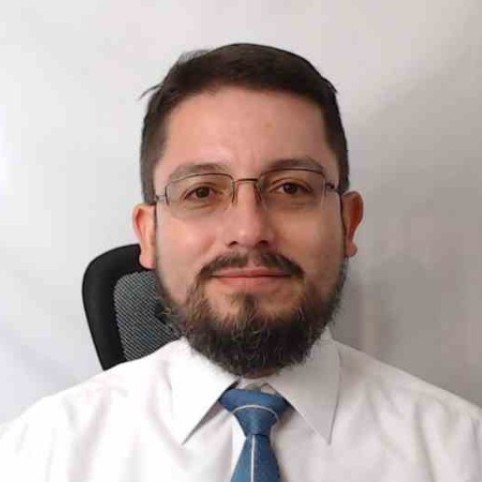
PhD. Esteban Hernández, CyberColombia
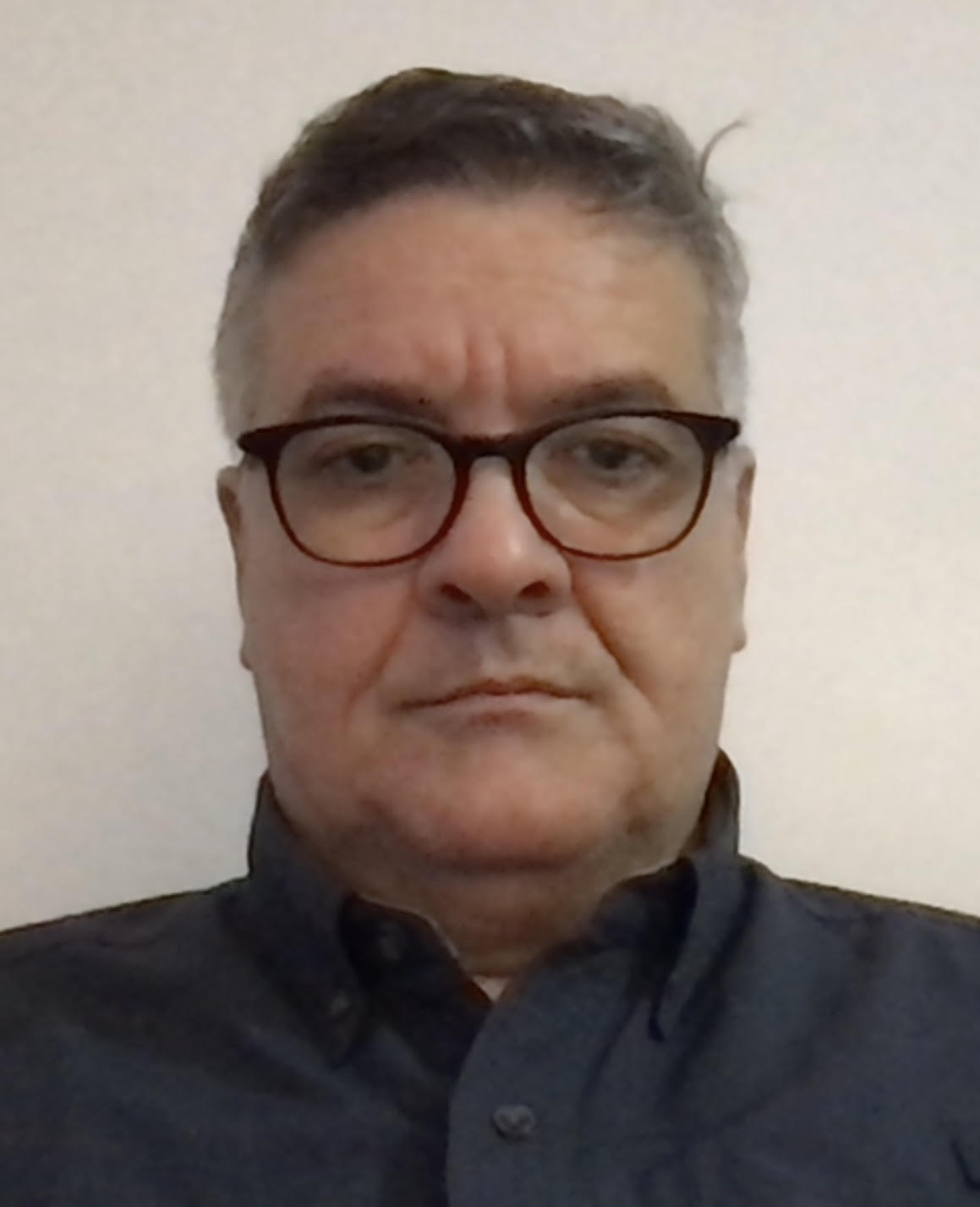
PhD. Saulo R. Freitas, INPE

Msc. Michael Duda, NCAR
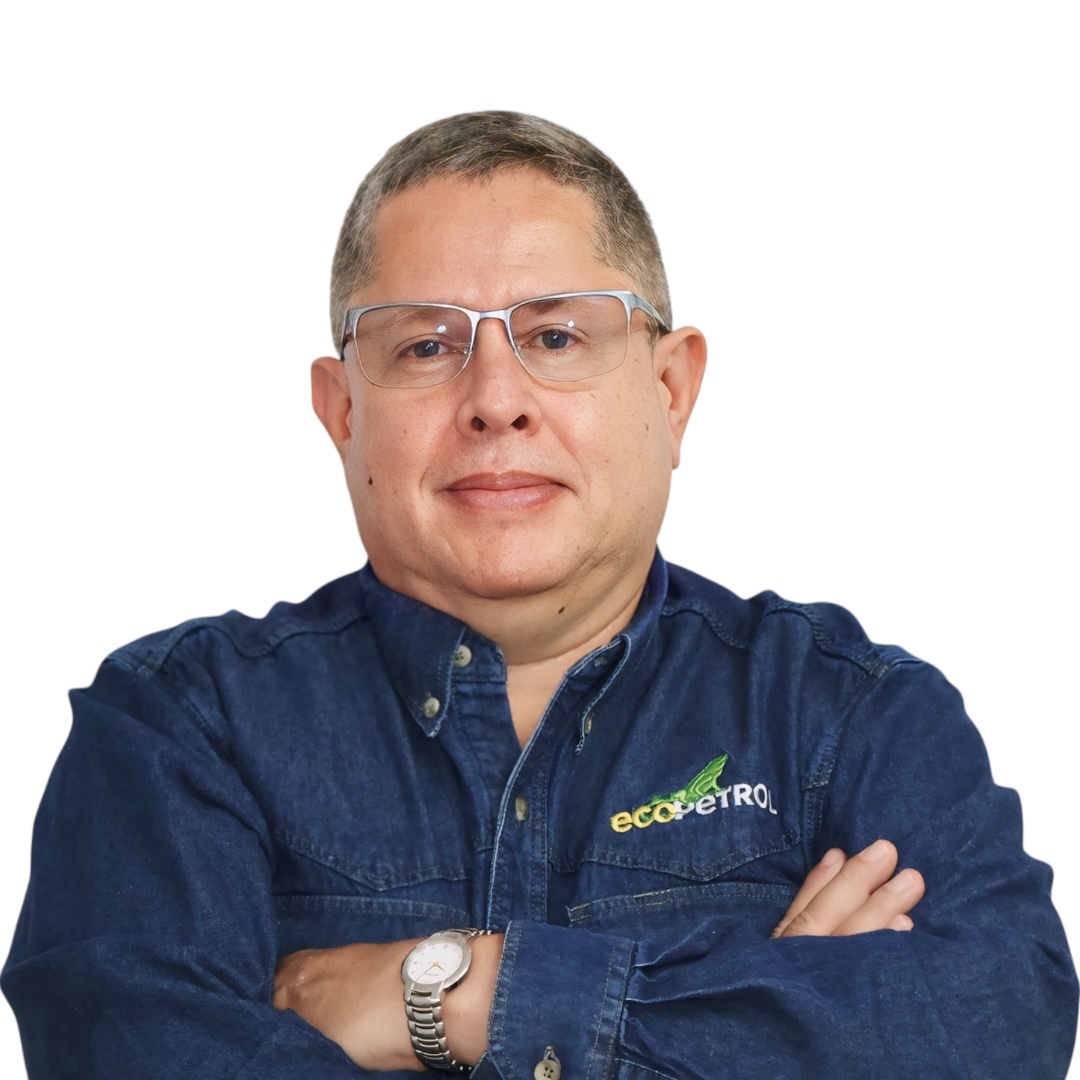
PhD. Efrain Rodriguez, Ecopetrol
Stay connected
If you would like to stay connected with this community, feel free to contact us at workshops@cybercolombia.org